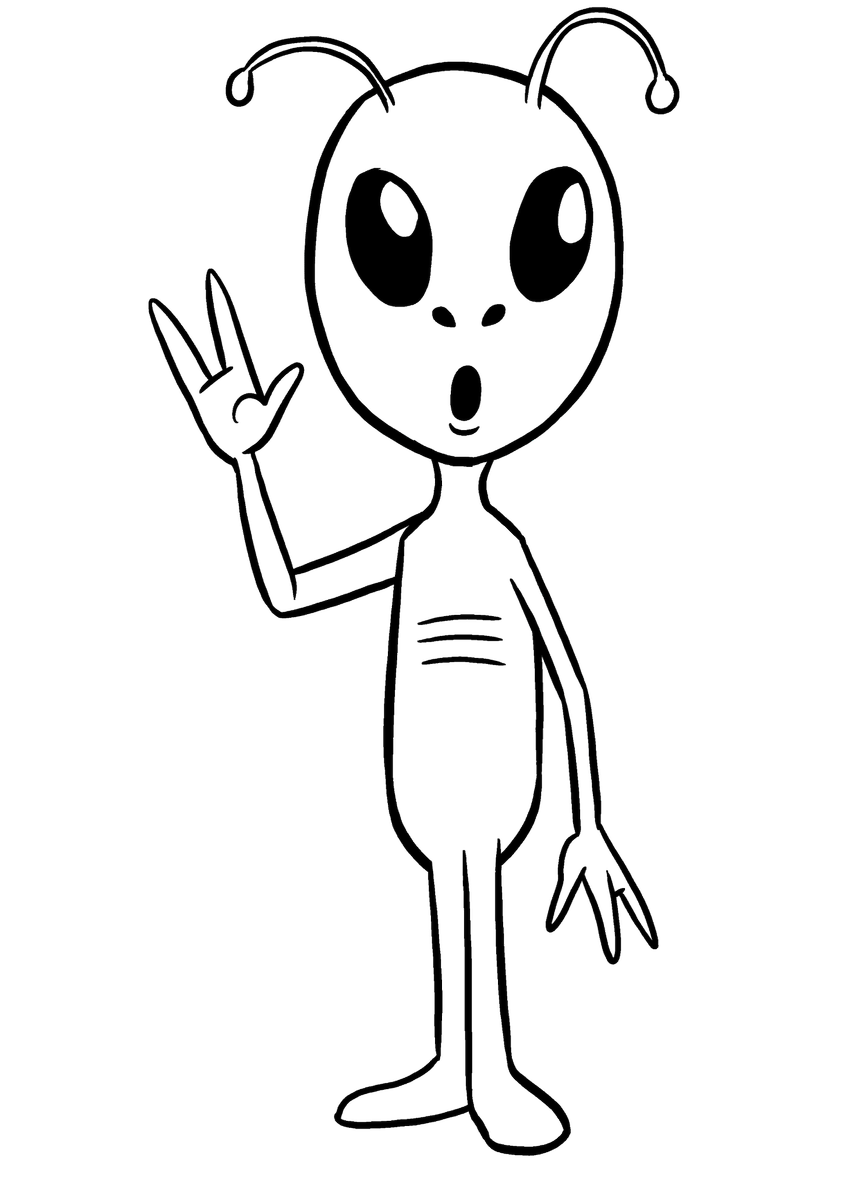
The enigmatic beauty of extraterrestrial life has captivated humans for centuries, inspiring countless works of art, literature, and cinema. Among these creative expressions, alien pencil drawings hold a special place, allowing artists to visually explore the vastness of the universe and bring their imaginations to life.
Whether you’re an experienced artist or just starting out, creating an alien pencil drawing can be an exciting and rewarding experience. In this detailed guide, we’ll take you through the fundamental steps and techniques involved in drawing an alien, providing you with all the necessary knowledge to embark on this artistic adventure. From choosing the right materials to capturing the unique features of an alien, we’ll guide you through the entire process, helping you create an out-of-this-world masterpiece.
Now, let’s gather the necessary materials and dive into the fascinating world of alien pencil drawings. Get ready to unleash your creativity and explore the boundless realms of your imagination.
Alien Pencil Drawing
Explore the cosmos with pencil and imagination.
- Choose unique features
- Master basic proportions
- Experiment with textures
- Create depth and dimension
- Add details for realism
Bring alien worlds to life with the power of pencil and creativity.
Choose Unique Features
When creating an alien pencil drawing, one of the most exciting aspects is designing the unique features that will bring your extraterrestrial creation to life. This is where your imagination can truly soar and you can explore a vast array of possibilities.
- Otherworldly Anatomy:
Step away from traditional human proportions and experiment with different body structures. Elongated limbs, multiple eyes, or even floating appendages can add an otherworldly touch to your alien.
- Unconventional Skin Textures:
Move beyond smooth human skin and explore a variety of textures. Perhaps your alien has scales, fur, or a rocky exoskeleton. Experiment with different shading techniques to capture the unique质感of your alien’s skin.
- Enigmatic Eyes:
The eyes are often a captivating feature of any creature. Give your alien unusual eye shapes, multiple eyes, or even glowing pupils. The eyes can convey a range of emotions and intentions, adding depth to your alien’s character.
- Distinctive Headwear:
Adorn your alien with unique headwear or accessories. This could be anything from a helmet with intricate patterns to a crown made of alien crystals. Headwear can add a touch of personality and make your alien stand out.
Remember, the key is to let your creativity flow and embrace the unknown. The more unique and imaginative your features are, the more captivating your alien pencil drawing will be.
Master Basic Proportions
Just like human figures, aliens also have proportions that define their physical structure. Understanding and mastering these proportions is crucial for creating a balanced and visually appealing alien pencil drawing.
Here are a few key points to keep in mind:
- Head-to-Body Ratio:
The head-to-body ratio plays a significant role in determining the overall proportions of your alien. Experiment with different ratios to create unique body types. A larger head compared to the body can convey a sense of intelligence, while a smaller head might suggest agility or speed. - Limb Lengths:
The length of the limbs relative to the body is another important aspect to consider. Longer limbs can create a sense of elegance or speed, while shorter limbs might convey strength or power. Pay attention to the proportions between the upper and lower limbs as well. - Torso and Extremities:
The size and shape of the torso and extremities (such as hands, feet, or claws) should be balanced in relation to each other. Consider the overall mass and weight distribution of your alien. A larger torso might indicate strength, while slender limbs could suggest agility. - Facial Features:
When it comes to facial features, there are no set rules. However, maintainingバランスbetween the size and placement of elements like eyes, nose, and mouth is essential. Experiment with different arrangements and proportions to create a unique and expressive face for your alien.
Remember, the goal is not to replicate human proportions but to create a believable and visually appealing alien figure. Embrace the freedom to experiment and let your imagination guide you as you master the basic proportions of your alien pencil drawing.
Experiment with Textures
Textures play a vital role in creating depth and realism in your alien pencil drawing. By varying the texture of different surfaces, you can add visual interest and make your alien truly come to life.
- Smooth vs. Rough:
Contrast smooth and rough textures to create a sense of depth and variety. For example, you could depict smooth, shiny skin on certain areas of the alien’s body and rough, scaly skin on others. - Organic vs. Mechanical:
If your alien has both organic and mechanical elements, use different textures to distinguish between them. Organic textures might be soft and flowing, while mechanical textures could be hard and angular. - Natural vs. Artificial:
Incorporate textures that suggest the alien’s environment. If the alien is from a lush, tropical planet, you might add textures that resemble leaves or flowers. If it’s from a rocky, barren planet, you could use textures that evoke stone or metal. - Unique Patterns:
Don’t be afraid to create unique and imaginative textures that don’t exist in the natural world. Perhaps your alien has skin that shimmers with iridescent colors or fur that glows in the dark. Let your creativity run wild.
Remember, textures are not just about visual appeal; they can also help convey the alien’s story and personality. By carefully considering the textures you use, you can create an alien that is both visually striking and deeply evocative.
Create Depth and Dimension
Creating depth and dimension in your alien pencil drawing is crucial for making it appear three-dimensional and realistic. Here are a few techniques to achieve this:
- Shading and Lighting:
Use shading and lighting to define the form and contours of your alien. Pay attention to the direction of the light source and how it creates shadows and highlights. By carefully blending and layering different shades of graphite, you can create a sense of depth and volume. - Linear Perspective:
Linear perspective is a technique used to create the illusion of depth by making objects appear smaller as they recede into the distance. You can use this technique to create a sense of space and atmosphere in your drawing. For example, you could depict your alien standing in a vast alien landscape, with distant mountains or structures appearing smaller in the background. - Overlapping:
Overlapping objects is another effective way to create depth. When one object overlaps another, it creates a sense of spatial relationship between them. For example, you could draw your alien’s arm resting on its leg or its tail wrapping around its body. - Atmospheric Perspective:
Atmospheric perspective is a technique that involves gradually shifting the color and value of objects as they recede into the distance. Objects in the foreground can be depicted with more saturated colors and sharper details, while objects in the background can be rendered with cooler colors and softer edges. This technique helps create a sense of depth and atmosphere in your drawing.
By combining these techniques, you can create an alien pencil drawing that is both visually appealing and realistic, bringing your extraterrestrial creation to life on paper.
Add Details for Realism
Once you have the basic structure and proportions of your alien pencil drawing in place, it’s time to add details that will bring it to life and make it appear more realistic.
- Fine Lines and Textures:
Use fine lines and subtle shading to add details such as wrinkles, veins, or scales to your alien’s skin. You can also add small details like freckles, scars, or birthmarks to make your alien unique and memorable. - Clothing and Accessories:
If your alien wears clothing or accessories, pay attention to the details and textures of these items. Render the folds and creases in clothing, and add details like buttons, zippers, or jewelry. These details will help ground your alien in reality and make it more believable. - Environment and Background:
Don’t forget to consider the environment in which your alien exists. Add details that suggest the alien’s habitat, such as rocks, plants, or buildings. You can also use the background to create a mood or atmosphere for your drawing. - Lighting and Shadows:
Pay attention to the lighting in your drawing and how it affects the shadows cast by your alien. Shadows can help define the form and depth of your subject, making it appear more three-dimensional. You can also use shadows to create a sense of mystery or drama.
By carefully adding details and paying attention to the small things, you can create an alien pencil drawing that is both visually stunning and realistic, leaving viewers in awe of your artistic skills.
FAQ
Have questions about pencil drawing? We’ve compiled a list of frequently asked questions and their answers to help you on your artistic journey.
Question 1: What type of pencils should I use for pencil drawing?
Answer 1: The type of pencils you use will depend on your personal preferences and the desired outcome. However, a good starting point is to have a set of graphite pencils ranging from hard (such as 2H or 4H) to soft (such as 6B or 8B). This range will allow you to create a variety of tones and textures in your drawings.
Question 2: How do I hold a pencil correctly?
Answer 2: There are different ways to hold a pencil, but a common method is to hold it near the end of the barrel, with your thumb and index finger forming a tripod shape around the pencil. This grip provides stability and control, allowing you to make precise lines and strokes.
Question 3: What is the importance of shading in pencil drawing?
Answer 3: Shading is a fundamental technique in pencil drawing that allows you to create the illusion of depth, form, and texture. By varying the pressure and direction of your pencil strokes, you can create areas of light and shadow, which help define the contours of your subject and bring it to life.
Question 4: How can I blend pencil strokes?
Answer 4: Blending pencil strokes is a technique used to create smooth transitions between different tones and values. You can blend using a variety of tools, such as a blending stump, tortillon, or even your finger. Gently rub the blending tool over the pencil strokes in a circular or back-and-forth motion to achieve a seamless blend.
Question 5: What are some common mistakes beginners make in pencil drawing?
Answer 5: One common mistake is pressing too hard with the pencil, which can result in dark, muddy lines and damage the paper. Another mistake is neglecting the importance of proportions and perspective, which can lead to distorted drawings. Additionally, beginners may struggle with creating smooth transitions between tones, resulting in a lack of depth and realism.
Question 6: How can I improve my pencil drawing skills?
Answer 6: Practice regularly and consistently. The more you draw, the more comfortable you will become with the medium and the better your skills will become. Additionally, studying the work of other artists, taking classes or workshops, and experimenting with different techniques can help you develop your skills and artistic style.
We hope these answers have shed some light on your pencil drawing queries. Remember, the most important thing is to enjoy the process and let your creativity flow.
Now that you have a better understanding of the basics, let’s explore some additional tips to enhance your pencil drawing skills.
Tips
Ready to take your pencil drawing skills to the next level? Here are a few practical tips to help you improve your technique and create stunning artwork:
Tip 1: Start with Basic Shapes:
When drawing complex subjects, break them down into simple geometric shapes. This will help you capture the overall proportions and structure more accurately. As you gain confidence, you can gradually add more details and refine your drawing.
Tip 2: Pay Attention to Light and Shadow:
Lighting plays a crucial role in creating depth and realism in your drawings. Observe how light falls on your subject and how it creates areas of light, shadow, and mid-tones. By carefully rendering these values, you can make your drawings appear three-dimensional and lifelike.
Tip 3: Use a Variety of Pencil Strokes:
Experiment with different pencil strokes to create various textures and effects. Short, light strokes can be used for delicate details, while long, sweeping strokes can create bold, expressive marks. Varying the pressure and angle of your pencil can also produce interesting results.
Tip 4: Practice Regularly:
The more you practice, the better your pencil drawing skills will become. Set aside dedicated time each day or week to draw, even if it’s just for a short while. Regular practice will help you develop muscle memory and improve your control over the pencil.
Remember, becoming a skilled pencil artist takes time and dedication. Embrace the learning process, experiment with different techniques, and most importantly, enjoy the creative journey.
With patience, practice, and a passion for art, you can create beautiful and captivating pencil drawings that will impress yourself and others.
Conclusion
As we come to the end of our artistic journey with pencil drawing, it’s time to reflect on the key points and techniques we’ve covered.
The Essence of Pencil Drawing: The beauty of pencil drawing lies in its simplicity and the ability to create stunning artwork using just a pencil and some basic tools.
Capturing the Basics: We learned the importance of mastering the fundamentals, from holding the pencil correctly to understanding the nuances of shading and blending.
Experimenting with Techniques: With practice, we explored various techniques like cross-hatching, stippling, and hatching, each adding unique textures and depth to our drawings.
Creating Depth and Realism: We discovered how light and shadow, along with the careful use of values, can create a sense of depth and realism in our drawings, making them come to life.
Practice Makes Perfect: Above all, we learned the importance of regular practice and experimenting with different methods and styles. This not only refines our skills but also helps us develop our own artistic voice.
As you continue your artistic journey with pencil drawing, remember to let your imagination soar and your creativity flow freely. With dedication and practice, you can create beautiful and moving artwork that will captivate and inspire others.
